Why Do You Need a Second Brain - Clear Useless Occupancy and Improve the Quality of Life
According to The New York Times, the average person consumes as much as 34 GB of information daily. The reason why modern people suffer from a lack of attention is information overload. Just imagine, the information you browse every day is equivalent to the entire content of 174 newspapers. It's hard for your brain not to be overloaded.
Microsoft research has found that the average American employee spends 76 hours each year searching for notes, items, or files that they have carelessly placed. A report by International Data Corporation states that knowledge workers, who work five days a week, spend an average of over one working day just searching for the information they need, and the probability of their efforts being in vain is nearly half.
As early as 1980, Steve Jobs compared personal computers to "bicycles for the brain". This was the first time since the electrical revolution that we had a tool capable of expanding the computing power of the brain. Subsequently, the Internet allowed us to directly access global information instantaneously and quickly find any information we needed through search engines. The memory capacity of the brain has also been extended, but all of this is "outside of the brain".
Fundamentally speaking, our brains are designed to generate ideas rather than simply for storage.
To truly strengthen the brain "outside of itself", it is necessary to establish a mechanism or system that can permanently preserve the ideas gained through experience, accelerate the conversion of information into knowledge, and help stimulate inspiration and create connections between ideas. Over the past two decades, with the popularization of the Internet and the evolution of mobile devices, knowledge workers now have user-friendly digital notebooks and powerful document storage and thinking organization tools at their disposal. These provide a clear and viable path for creating an "external brain" - storing the information we care about and recording what we have learned in an external, digital, and centralized manner. We now have our own digital extended memory that can be accessed at any time.
The Function of the Brain Is to Stimulate Creativity
What is creativity? Creativity is the connection of ideas. Combining two seemingly unrelated things together creates something interesting and new. There is no algorithm or fixed procedure involved. Creativity often strikes like a flash of inspiration, making it seem very mysterious. In fact, the psychologist and Nobel laureate in economics, Daniel Kahneman, mentioned the brain's thinking process in his book *Thinking, Fast and Slow*. In Kotler's theory, it is assumed that there are three neural network systems in the brain. Each system involves several brain regions. Although they overlap with each other, these three networks have completely different thinking functions.
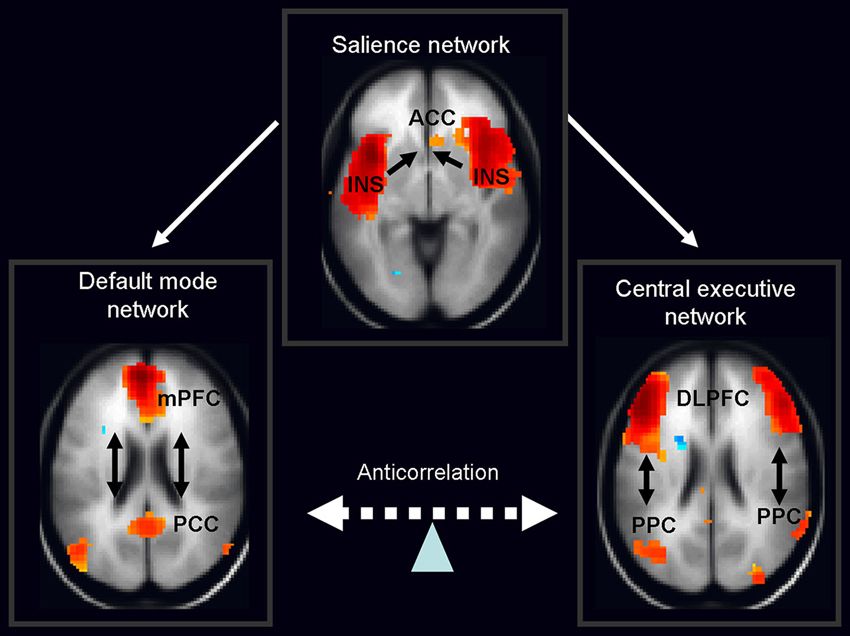
So-called training in creativity involves fully activating these three networks and enabling them to switch quickly and naturally! And to make all three networks active.
It's time to liberate your brain. We need to build a second brain system as your productivity tool. Store your memories and ideas in this second brain, allowing your first brain - your actual brain - to focus only on thinking and planning.
The CODE methodology -The WITCOW Knowledge Base helps you complete "COD"
If we search for "Second Brain" on Google, we will find that the book most frequently mentioned is *Building a Second Brain* by Tiago Forte, which was published in 2022. Tiago proposed a proven method - CODE, which can effectively organize our digital lives and unleash our creative potential. I believe that almost all knowledge workers have faced a situation where they feel their brains are insufficient due to information overload. We feel that we have read a lot of things but not absorbed any valuable knowledge. We have tried various ways to organize the knowledge we have learned but still cannot find it when we need to use it.
Therefore, we need a feasible method that can help us achieve the following:
- Manage personal information streams to relieve the pressure of "information overload"
- Save all accessible learning resources, such as articles, podcasts, books, etc. We don't need to remember all the details
- Be able to quickly find any content we have read, learned, or thought about
- Organize and retrieve the external knowledge we have stored in a result-oriented manner
- Spend less time searching and more time making idea connections, that is, creative work
- As we accumulate this external knowledge base, we can form our own insights, that is, internalize knowledge
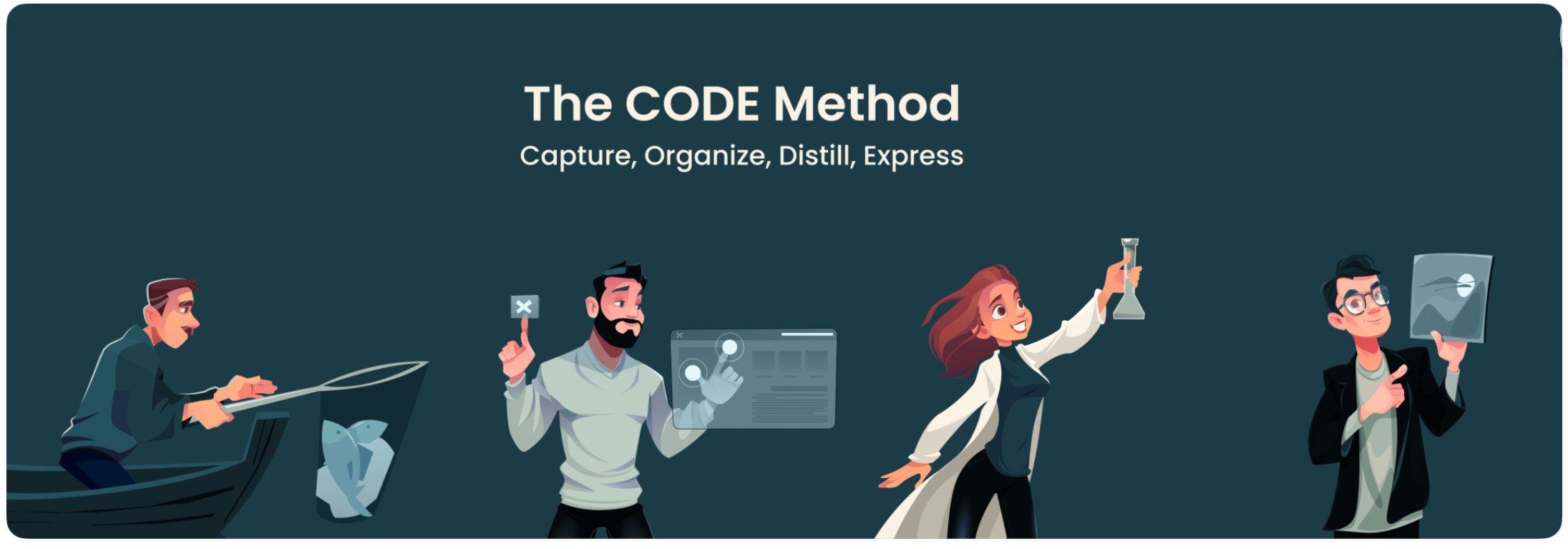
The goal of the CODE method is to enhance the brain's creativity with external tools and methodologies, compensating for the congenital deficiencies of our biological brains. This simple method consists of four steps: Capture, Organize, Distill, and Express. CODE is the abbreviation of the first letters of these four steps.
PARA Information Organization Method -The WITCOW Knowledge Base helps you classify and organize information
After more than a decade of personal experimentation and teaching thousands of students, Tiago developed a method for organizing information - PARA, a simple, comprehensive, and highly flexible system that can be used to organize any type of digital information on any platform. The PARA method is based on a fundamental principle: all information in our lives can be divided into only four categories.
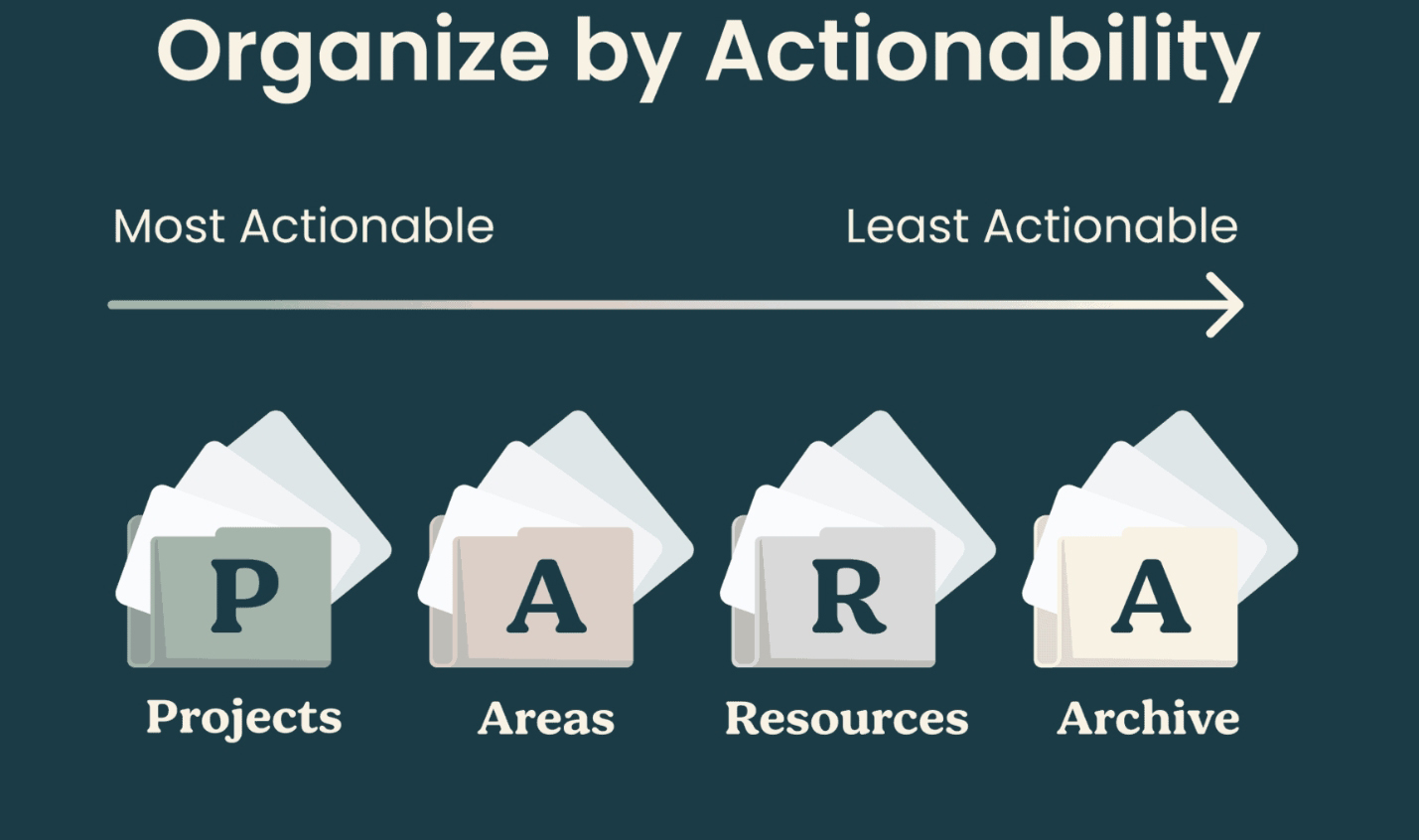
- Projects: Short-term ongoing projects (projects in work or personal life)
- Areas: Areas that you want to pay long-term attention to (your long-term personal interests)
- Resources: Subject resources that may be used in the future (such as pictures, videos, templates, etc.)
- Archive: Inactive items in the other three categories (resources that we need to regularly archive and collect)
WITCOW has sorted, classified, and associated all information. We classify the information by author, by theme, and by category. Moreover, all this information is interconnected, making it convenient for you to establish an information association network.
Ideal tool-WITCOW knowledge base
Although the core of building an ExoBrain lies in the way of thinking and the execution method, which is an effective means of organizing and consuming information and internalizing it into knowledge, as the saying goes, "A craftsman who wishes to do his work well must first sharpen his tools." We need software that is easy to use.
The arsenal of professional users.
Don't worry! Don't be intimidated by the "arsenal"! If you are not a person who is heavily dependent on information organization, or if you have already grasped the essence of information organization, WITCOW can meet all your needs, including fast recording and retrieval, simple layout, internal links, and no ads...
If you only want to use one software to build your own ExoBrain, then WITCOW is the choice!